Showing posts with label Thru-Hulls. Show all posts

Sunday, July 31, 2022

Water Ready

After a slightly longer than normal break we were back working on First Light. The timing put us in the boat yard in the midst of a heat wave, with daily temperatures deep into the 90s. The day I started this post it was 1817 local time. Our little weather station had the air temperature at 96, a heat index of 115, and showed the barest hint of a breeze. I was reminded of the months I spent working in the boat yard trying to earn enough to keep cruising. Days that were not among the highlights of our years on Kintala. Yet here we were again, toughing it out while trying to get First Light ready to splash.

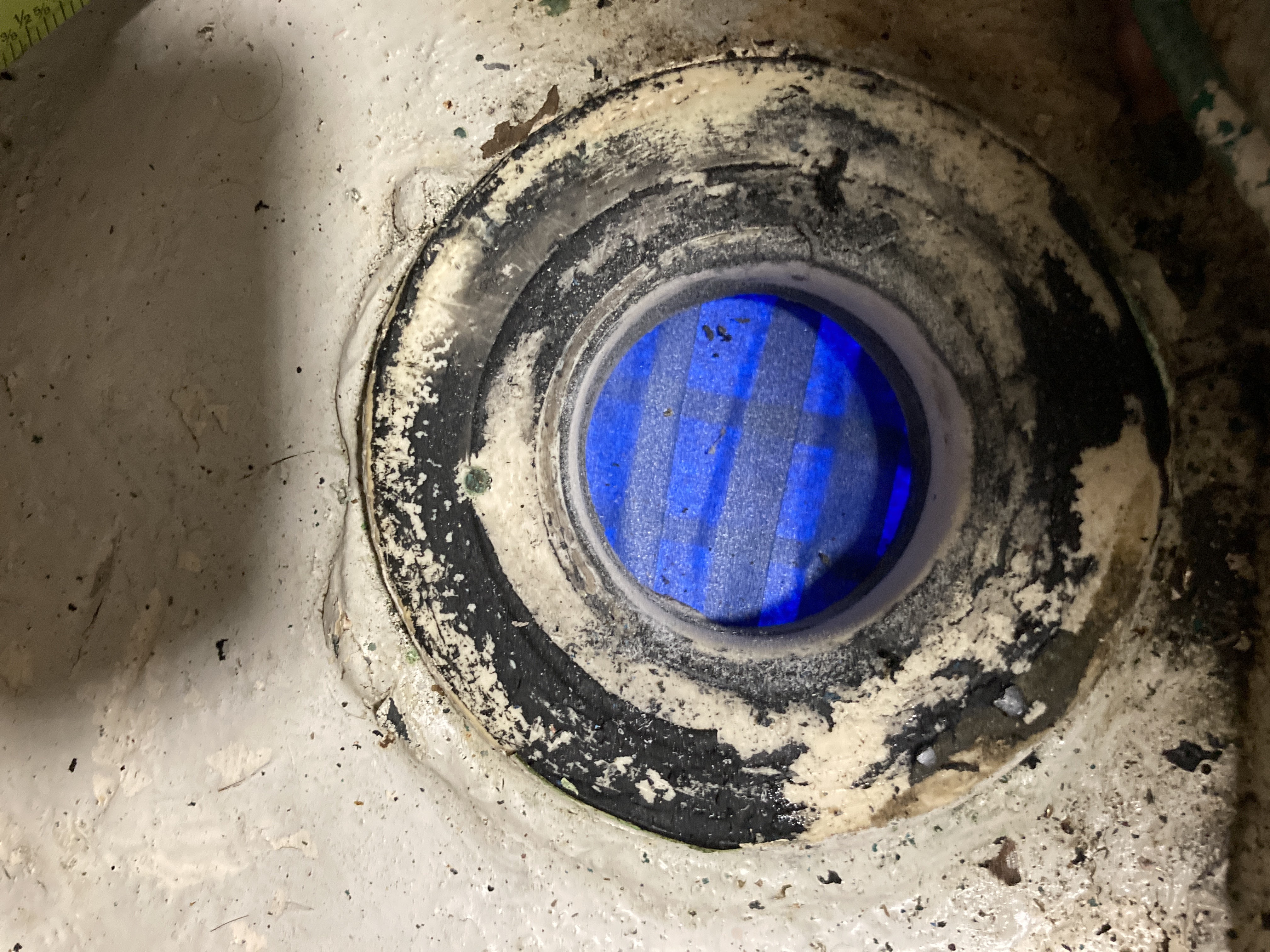
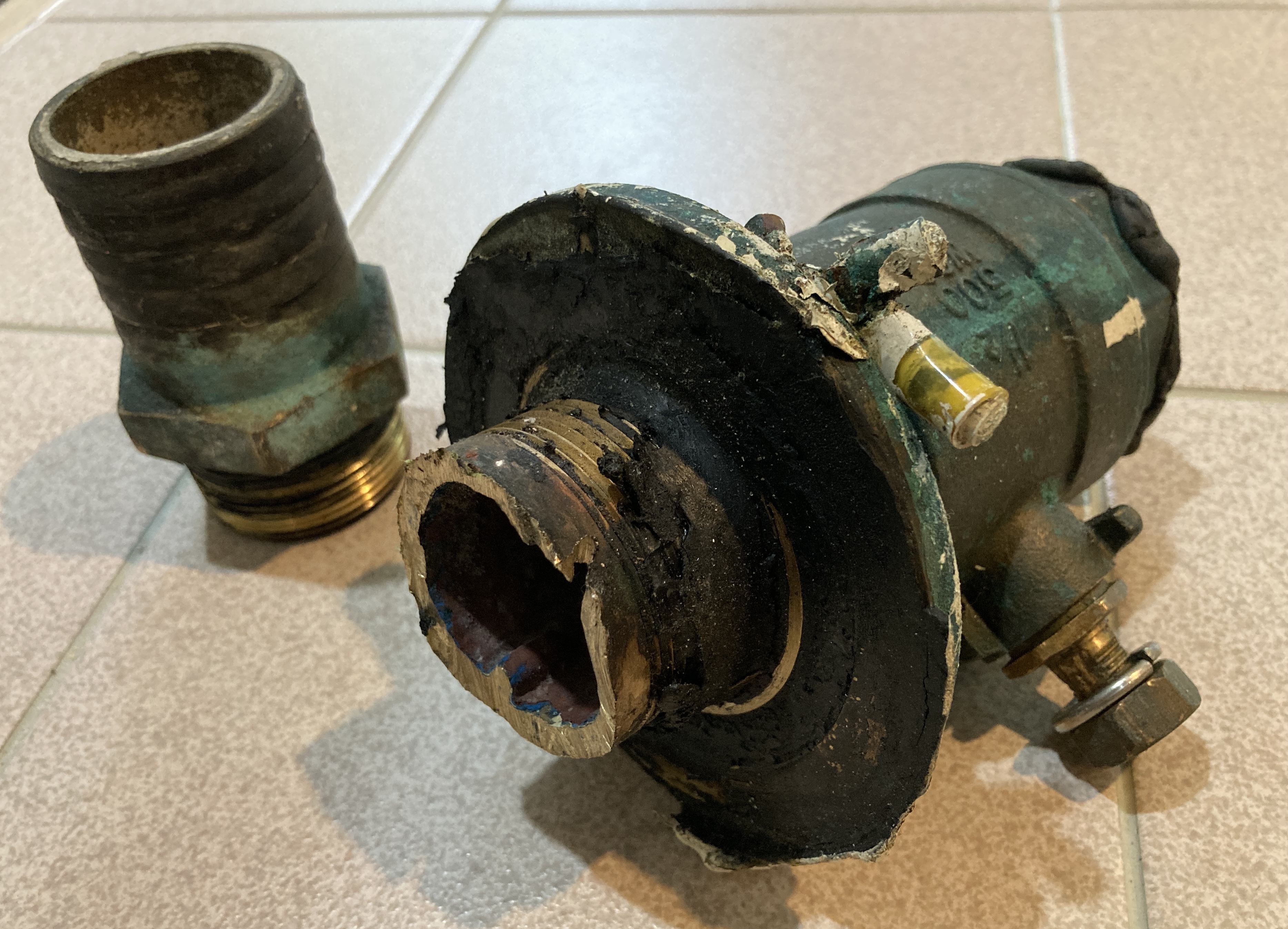
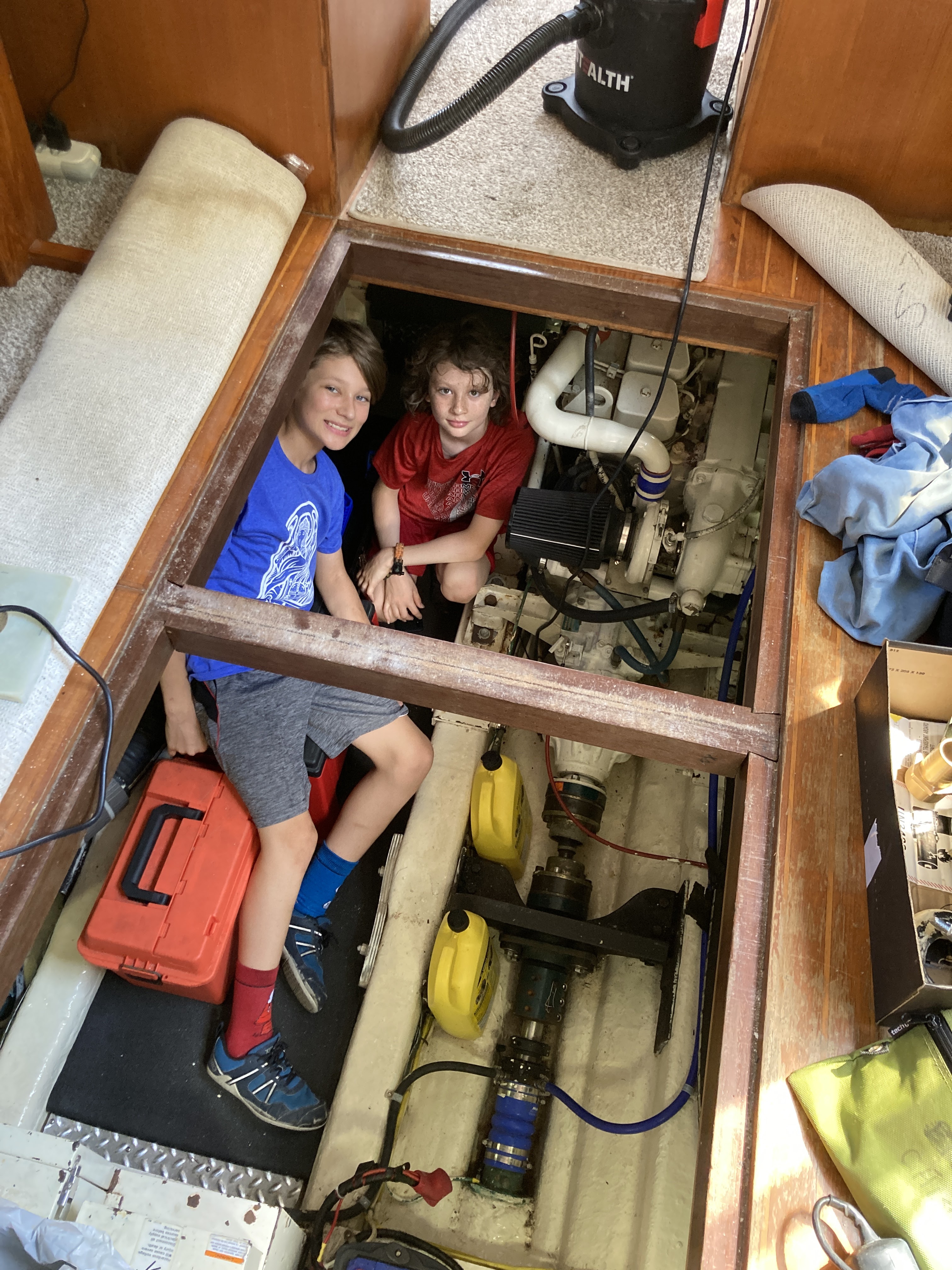
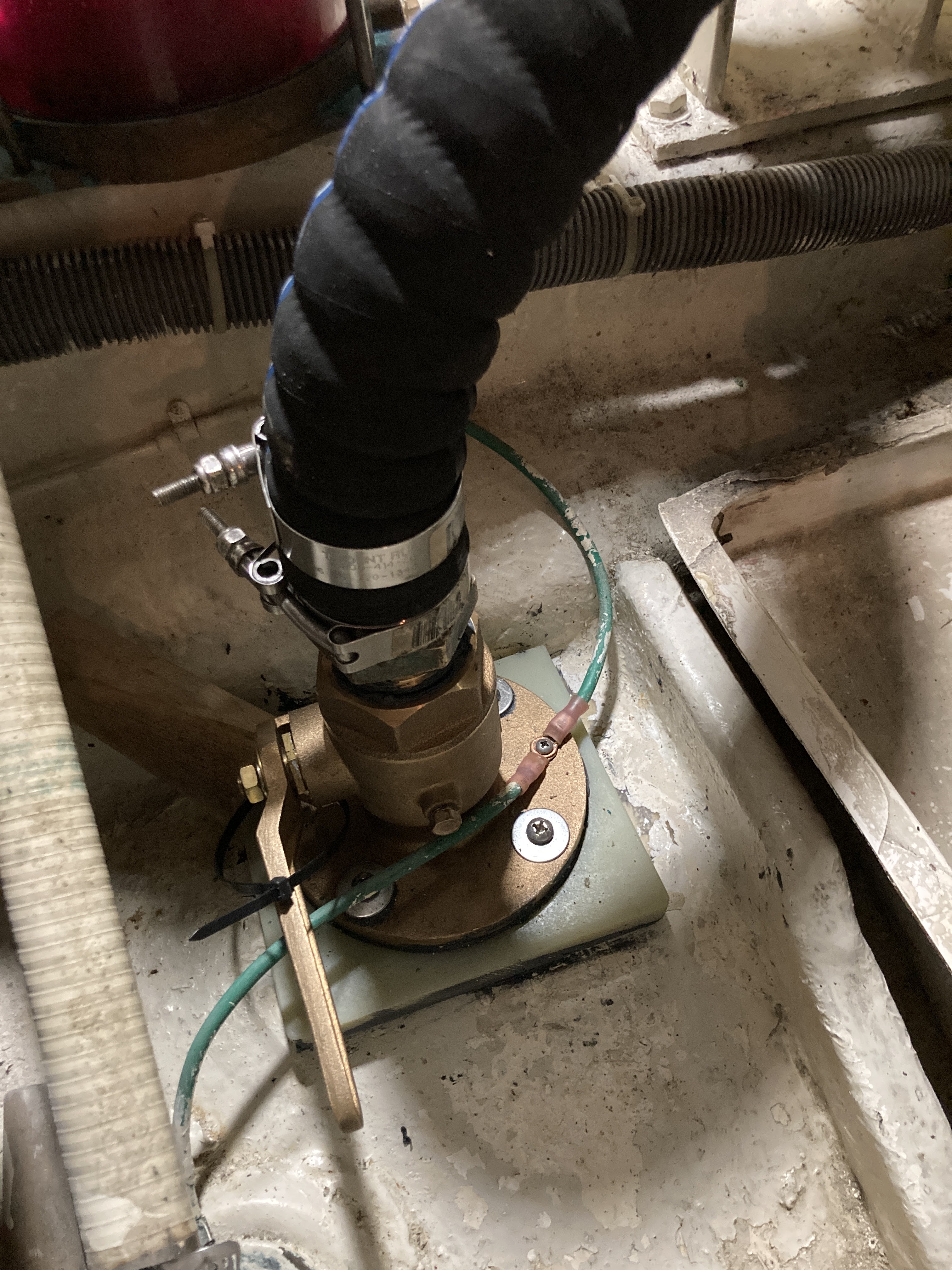
We had two major jobs on the list for this trip; both pressing due to insurance concerns that I don't completely understand. What I did understand is not getting them done in a timely manner was going to cost us. The first was replacing the starboard engine thru-hull. The new one is a proper sea cock complete with backing plate and anti-rotation screws. The install went smooth for a boat project, aided by the fact that Grandsons M (12) & G (10) joined us for this trip. Both regularly work with me on home projects and they have been a real help during this trip. Their young bones are far better suited for climbing in and out of engine room hatches and fetching necessary tools than are mine. They got their hands dirty as well or, in the case of the thru-hull, got a proper coating of sealant. They were rightly proud of the work they did helping me fill the hole that was in the bottom of the boat.

The second job required adding over-voltage protection to five different power feeds. Two 100 amp breakers were needed in the engine emergency start system, with three 50 ampers required in the battery charger circuit. The engine starting circuit I kind of understand as those lines were basically unprotected. On the other hand the boat has survived four decades without said protection, and now it is a hazard that must  be dealt with before the insurance company will let the boat get wet? The battery charging circuit is already protected by two different circuit breakers; each of which will likely open long before those 50 amps pop. But that's what the survey says, that's what the insurance company demands and that, as they say, is that.

The morning of the wiring task was spent at the parts and tool store. I got me a new toy, a hydraulic crimper that will easily handle the 6 AWG task at hand. Expensive, but still far less than it would have cost to contract the job out. And, well, I got me a new toy. We found the terminals needed for the 100 amp job. Those for the 50 amp job had to be ordered and would be a day behind.


At first glance the 100 amp breakers in the emer-start circuit looked an easy install. Cut the wires, add terminals to the cut ends, install the breakers, zip-tie as necessary, finished. A schematic etched into the faceplate of a box marked "Starting Switches" with 3 switches mounted, suggested that simply turning them to "OFF" would drain the wires of any spark-making capability. But I am a skeptic when it comes to many things, with boat wiring being near the the top of that list. My little volt meter showed both lines full of spark-making potential. It didn't appear that any combination of switches removed said potential. The day was wearing on and my heat fuzzed brain was giving up on the puzzle. Time to head for a cold shower and tackle the puzzle anew in the morning. 

Sleeping on a problem is often a good way to solve a problem. The next morning I just pulled the ground wire off of the emergency start battery. A quick look at the voltmeter affirmed that the lines were dead and the dikes were brought to bear. An hour or two later and that half of the insurance electric mods were done. I know the engine starting circuits, both normal and emergency, were tested during the sea trial. But that was nearly a year ago now and I have simply forgotten which switch does what. The first time we go back in the water the engine contractor will be along to check the work he did for us. I will get a refresher course on switches when that happens. 

With nothing else to do to until the electrical system until parts arrived, I went back to working on the cockpit roof / solar panel mount.  An earlier project that is mostly finished, it still needed some edge work done. Ninety plus degrees in blazing sunshine? No hill for a climber. But it was a slow climb, with many breaks to fill the water jug and squirt down with a hose. Did I mention that it reminded me of some hard days I had hoped to never see again? By the time the parts showed for the second half of the electric job I was as nearly spent as the day.

The next morning brought an enthusiastic start at getting the last wiring mod finished, and all went well for oh, 20 minutes or so. With battery charger powered down and all the boat battery switches open, there was no chance of making sparks, right? The volt meter suggested no spark potential. But First Light has solar power charger circuit laid on top of inverters coupled with AC charging systems riding piggy back engine alternators backed up with a gen-set. Not all of that was installed at the same time. With revised and up-to-date schematics for old boats being non-existent, what were the chances of some kind of sneak circuit of which I had no clue?  I disconnected the ship's battery bank ground cables. Also, the work area in question was directly above that same battery bank. Moving slow and being careful was the watchword for the mod. And a good lesson for the two young mechanics working with me.

Breakers installed and original wiring rerouted to them; it came time to fabricate new wiring back to the charger. And...the parts that had shown up the day before were wrong. Yep, who would have guessed that? The boys and I headed off to find the right ones, wiring connectors for 6 AWG wire with 1/4 inch mount holes. After more than an hour of fruitless searches through 4 different stores, we returned to the boat with tails tucked and anticipating another day's delay for the right parts to arrive. Deb took over the search and drove off. A half hour later she sent me a text. She was on the way with the right parts. If you need parts, send one of the world's best parts department managers to find them. (That is why she ran my aircraft parts department for many years!) Good mechanics might be rare. But Part's experts? One in a million among good mechanics.


A couple of hours after she returned with the needed bits, wires from the breakers to the charger were fabricated and installed. Zip-ties were were placed to make for "happy" wiring, battery ground cables connected, breakers and switches were closed. The charger came on line, and our little electrical world was up to insurance standards. After a bit of clean-up work, and so far as we know at the moment, First Light is water ready once again.

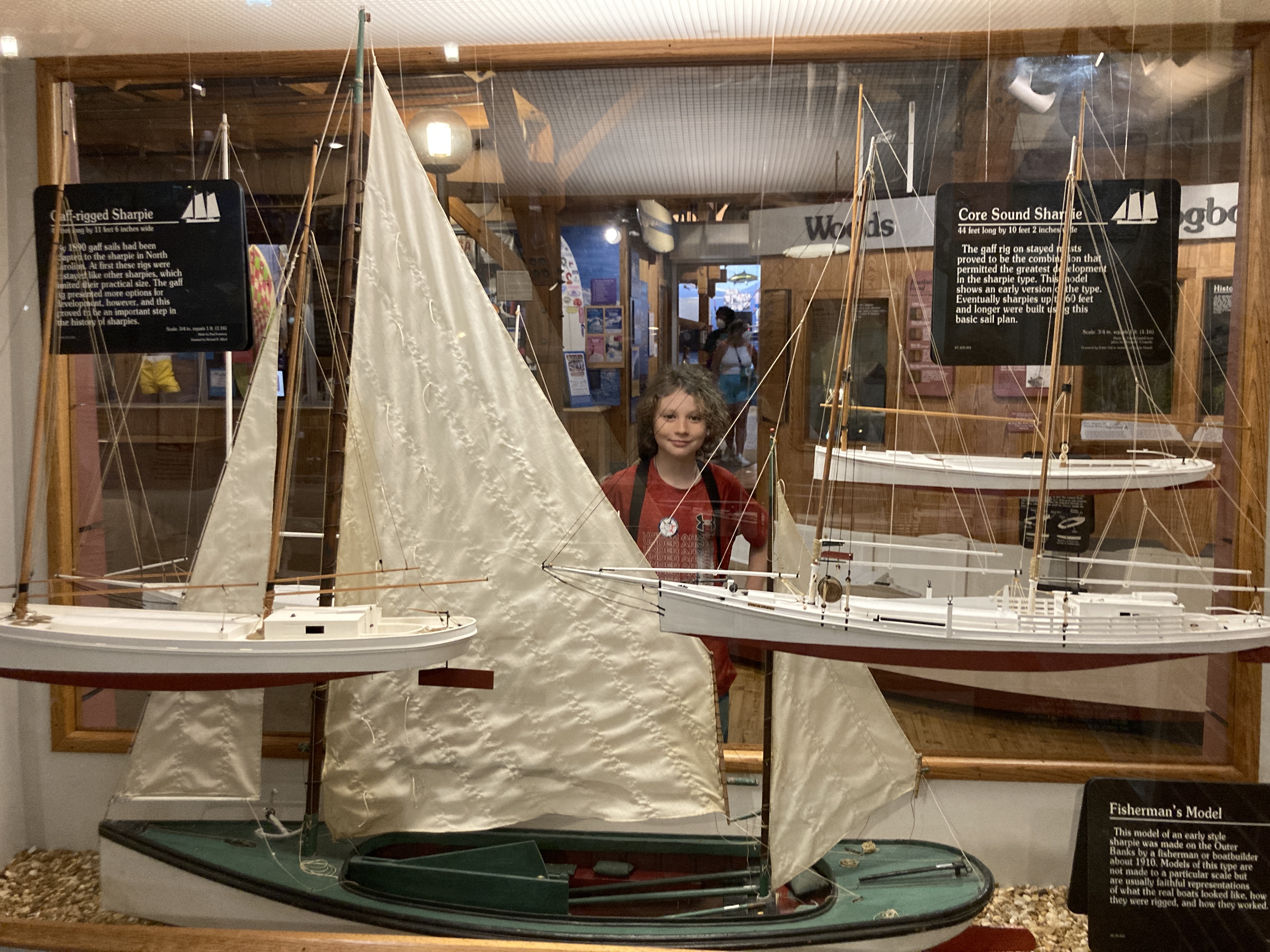
With the project targets met, and a little extra, Deb changed the getting home plan. Instead of a two day trip she changed it to three. Day one would include a ferry ride across the Neuse River to Beaufort, NC to visit a maritime museum along with a boat shop dedicated to working on wooden boats. Then we would head west for a couple of hours to a hotel with air conditioning and a pool.

The trip across the Neuse was just a 20 minute ride but, the moment the ferry dropped the mooring lines and began to back away from the loading dock, my heart took a little lurch. This was the first time we had been on near-to-big water in over three years on any kind of a boat. Standing on the upper deck, looking across the expanse, smelling the salt air, and watching a couple of cruising boats work their way along the river... For just a moment it seemed like a good idea to ride the ferry right back, head to the boat yard, have them fire up the travel lift, drop First Light into the water, and motor off somewhere, anywhere, that we could drop the hook and hope for a few dolphins to swim by and welcome us back. But heart tugs aside, there are considerations to consider and plans to be made before that can happen.

I am pleased with the progress we made and the chance to spend some quality time with the grandsons. But, short of a life-threatening catastrophe, this is the last time I work on a boat during the Summer months while south of the Mason-Dixon line. Which may be the biggest consideration to consider to setting a splash date. So, as is normal with all life, we will just have to see how it all unfolds while trying to muster up the necessary patience and garnering what little wisdom can be found so as to make the best decisions we can.


Friday, May 27, 2022

Making progress without moving forward...

Efforts to get First Light ready to splash continue. This stint was supposed to be the one where we finished up the last of the items keeping the boat on dry land. We made some good progress, but we were also forced to push the launch date from next month to a month yet to be determined. Making progress without moving forward: a paradox likely familiar to many a sailor. 

On the progress side, the repair of the hardtop over the aft deck, the one that supports the solar array, is finished. The job took longer than hoped but not as long as feared. It also came out looking better than it might have, thanks in large part to Deb's expertise with paint and primer. I can shoot a mean coat of color, but brush and roller efforts often end up looking like a Kindergartner's project gone awry. While she made my repair look better than it deserved, I crawled around in the dirt under the boat sanding prop (times two), rudder (times two), and drive shaft (times 2). Trawlers, it turns out, have a whole lot more going on under the water than do sailboats. The complex shapes of much of that stuff makes hand sanding the best approach. Slow going even with 40 grit paper. But by week's end all the shiny metal bits that hang down in the wet had been covered with several coats of dull grey. Spray cans I can handle.

Part done, part not. We used a good primer first then a topcoat.


All done and snaps replaced. Oh, and by the way, that stretchy shipping plastic
wrap works great to protect things like the teak support poles from stray paint.


One of the first projects we did on First Light was to to replace the busted up ceiling trim in the salon. The last project we did this time around was to replace those trim strips once again; this time with real wood rather than plastic strips pretending to be wood. Plastic seemed like a good idea at the time, it sat pretty in the rack, required no sanding or staining, was cheaper to buy and a breeze to install. But it drooped and warped in the heat, looking even worse than the busted up trim it replaced, and just had to go. Sanding, staining, measuring, cutting and installing took most of a day, but the wood trim looks so much better. Still, doing projects over again is not really making much forward progress.

There are additional issues putting serious brakes on going forward. First Light now sports a hole in her bottom where the thru-hull for the starboard engine cooling water inlet used to be. The thru-hull worked fine during the sea trial and survey, but was found to be frozen tight this time around. Efforts to break it free resulted in the steel handle overwhelming the soft bronze of the shaft. Something that, for a short while anyway, put a serious dent in my mood. Taking angle grinder in hand and chopping that worthless hunk of metal out of the boat brought about a bit of mental clarity. It was far better to uncover the failure now, rather than when the boat is hanging in the sling waiting to be lowered into the water. With one thru-hull already tossed, a second that hasn't always been cooperative may fall to the grinding wheel as well. Sourcing parts and installing them will likely take more time then we have between now and the originally schedule launch date.


Another item making for the delay are electrical modifications needed to address a lack of over-current protection in several circuits. All efforts to contract the work out at some reasonable cost have come to naught. Once upon a time I spent several months completely re-equipping and rewiring a twin-engined sport fishing boat. Modifying First Light to keep the insurance company happy isn't much of a challenge in comparison. But (fortunately) I don't work in a boat yard anymore, special tools, materials, and parts are not lying right at hand.  And (unfortunately) no one is paying me to work on First Light. Sourcing parts, acquiring the necessary tools, and doing the re-wiring needed is going to chew through a nice chunk of $$$ and take many a vacation day. Then there is the gelcoat work at the waterline the obviously has to be done before there is water lapping at that line. Many of the tasks still on our list could be done on the water but, truth be told, they will be much easier to accomplish with parts and supplies a car, not dingy, ride away. In addition, hurricane season draws near. A boat inland, on the hard, is far more secure in the face of another enthusiastic hurricane season. We live two days away from the boat. Should a storm pop up while the boat is at a dock we might be hard pressed to respond in time. Boat-based reasons to stay on the hard, making progress but not moving forward, have piled up.

Yet, for all of that, it is non-marine issues that have us thinking this is a good time to stand in place. Not to put too fine a point on it, but the world is in state similar to that of the boat, making progress without moving forward. There is a new telescope now looking deeper into the cosmos than human kind has ever managed. China is launching a deep space telescope and a space station of its own, increasing the human family's understanding of our place in creation. The LHC is back in service with new and more powerful sensors, delving as deep into the world of quantum as the JWS is into space. The depth of knowledge soon to be ours is nothing short of astounding. But genocidal war now fills the headlines with threats of nuclear exchanges once again being floated by the powers-that-be. Here in America, gun violence is now the leading cause of death among children. Most people now realize that climate change is real and pandemics actually do rage across the planet. But the gains we are making in knowledge are being negated by a lack of wisdom and compassion. We don't know what to do with what we have learned, and we don't seem to care enough about each other to try and figure it out. 

By my modest lights, a good part of the world, including the US, isn't even stuck in place, it is working at going backwards as quickly as it can. So, on a personal level, husbanding resources while keeping money flowing in to offset money flowing out seems like a good idea. In addition, our home base is far inland, surrounded by the people we love most in the world, out of the reach of hurricanes, not in the fire zone of the American West, with plenty of water still falling from the sky and farm land not too distant. The biggest physical threat facing our land home is the occasional tornado and power failures due to heat waves. Pretty low risk stuff compared to many parts of the country, let alone the world. 

Getting back on the water is still our ultimate goal. But, at this moment in time, taking full advantage of the good fortune surrounding our family seems like the prudent thing to do. Getting First Light in the best shape we can manage while giving human kind a chance to figure out what “moving forward” means? For the time being I am pretty content with that being the best way to make some personal progress.


Not a sunset over the water, but still a beautiful sunset over North Carolina.


Saturday, February 19, 2022

Projects and Progress

 I didn't anticipate it was going to be a very productive trip because it got cut short by a full day by work schedules, but getting out of St. Louis when a winter storm is heading that way seemed like a good idea. No snow when we left, but while I was heading down to get coffee at the hotel the next morning this view greeted me out the window:

A very nice lady offered an extra snow brush she had in her car and we were off. It was beautiful scenery to drive through for sure, but still it was going to be nice to get on the other side of the mountains for warmer weather.

My projects for the trip included changing the hailing port decal on the stern. We love the name of the boat, First Light, so no need to change that, but the hailing port had to go. Fortunately, since the last time we did this my daughter and I bought one of those cutting Silhouette cutting machines and we were able to make quick work of the decal (thanks Amber!) We used Oracal exterior permanent vinyl and it installed really easily. The product info says it lasts up to 6 years. We'll see...the last ones we put on Kintala (at a cost of $125) only lasted a couple years before they faded. Excluding the cost of the cutting machine the decal materials only cost $30 and there's enough left over to do it three more times. Vast improvement. I picked up the machine on Facebook Marketplace for less than $200 and it was worth every penny as we use it constantly.

My next project was to continue to try to free up a frozen thru-hull valve. It's the thru-hull for the head overboard and it was completely stuck. Tim had sprayed it repeatedly the last two visits with PB Blaster to no avail. It was stuck in the open position so it was really hard to get anything to stay on the valve long enough to work on the barnacles. This time around I taped over the outside and then poured a bunch of Barnacle Buster in there over a day's time and then with a little help from a 2x4 and a hammer I was able to get the thing free. I'm still working it some more over the next visit to continue to clean it up and lube it, but I think we have averted a replacement, a big deal since a replacement would have been half a boat buck at $465 for the whole assembly.

Another project I wanted to tackle was a thru-hull map for the boat. This boat has a lot of thru-hulls and it's good to know where they are and what they operate in the event of a water-in-the-boat emergency. Fortunately, one of the previous owners of the boat took the time to put tags on each one to identify its purpose. Thank you whoever you were. A little time with Gimp and I had the map. If you've never used Gimp before, it's an open source Photoshop program. I really love it, it's free, and it's just as capable.

Next on the project list was Tim's. The hardtop over the cockpit on First Light is a wonderful thing, but the design and execution are sadly lacking. The framework was built sturdily enough, but they then laid 1/4" plywood on top and then covered that with a very thin Fiberglass sheet that was maybe 1/16" thick. The plywood and frame structure were then painted on the underside. None of the holes mounting the solar panels on top of the hardtop were sealed properly, so water soaked the plywood and it rotted, leaving the 1/16" fiberglass sheet as the only support. Not good. Tim took his trusty "Magic Tool" (our new absolute favorite can't ever be without boat tool) and with a scraper blade was able to carefully scrape the rotting wood off the fiberglass sheet. Then new plywood was covered in fiberglass resin and put in place. Next trip it will be faired, sanded, and repainted.


This is how thin the fiberglass sheet is.
You can see light through it and all the
wood isn't even sanded off yet.


There's still several other spots that he has to dig out and replace before he does the fare and paint. 

His other project was the repair of the port side settee on the flybridge. At some point in the history of the boat, somebody decided that there wasn't enough access to the space under the settee and they cut another access hole and attempted to make a functional cover for it. I say attempted, because the design was sadly lacking in structural integrity so when someone at some point stood on the settee–probably to fold up the bimini as that appears to be the only way to reach it unless you're freakishly tall–the top of the settee caved in and broke the lid support structure that they had added.

Here's the hole from the top.
It was all constructed out of plywood, none of which was sealed well and had soaked in the water that fills the channel you see here every time it rains.
Here's the other factory-original access hole forward of the added one.


The lid was also plywood glued to the cut out piece of fiberglass.

Tim spent two days grinding and sanding and building a new support structure. I painted the support pieces which he installed and then he scraped off the really old, ugly, decaying sealant from around the edge of the settee and painted the top of it. We're trying the Rustoleum Marine Topside Paint on this for the first time and so far I'm pretty impressed with it. I then ran a new bead of sealant (I loves me some Dow Corning 795. Best. Sealer. Ever.) Somehow I neglected to get a photo of the finished project, but it's probably best to wait because after we finished sanding and painting that side, it became quickly apparent that we were going to have to do the other settee because...well...you know how it goes when one part looks new and the rest looks like crap. I think someone once coined it as Project Creep...So next trip I'll get some finished project photos.

All in all it was a very productive few days, but it left very little time for ukuleles and guitar and drums so the music suffered a bit. We did manage to have time to spend at a birthday bonfire with our new friends Jay and Evan who have a boat they are restoring just down a couple boats from ours. (Happy Birthday Evan!) It was a fun evening and helped us to remember that the whole reason we're doing this is because the Cruising Community is absolutely the best ever.